How it works
How minoxidil works
First, let's focus on what it isn't. Minoxidil is not a hormone. It isn't known to affect your oestrogen, your testosterone, your cycle, your fertility, your mood or your libido. A lot of women assume every hair loss medicine is hormonal, and after years of contraception and perhaps HRT, many women in Norwich are understandably wary. Minoxidil works on the hair itself.
Every hair on your head cycles between growing, resting and shedding. In female pattern hair loss, the growing phase gets shorter and shorter, and each new hair comes in finer than the last. Minoxidil is thought to lengthen the growing phase, shorten the resting phase, and improve blood flow around the follicle. For women who respond, more hairs are growing at any one time, and each one grows for longer and comes in thicker.
Minoxidil comes in two forms:
- Topical minoxidil is licensed for female pattern hair loss and is sold in pharmacies across Norwich. The 5% foam is applied once a day.2 Another option is a 2% solution applied twice a day. You'd judge it after three to six months, and it only keeps working for as long as you keep using it.2 The problem is that many women don't. It's greasy, it can be hard to get through long hair, it stiffens your style, and application every day can be a lot.
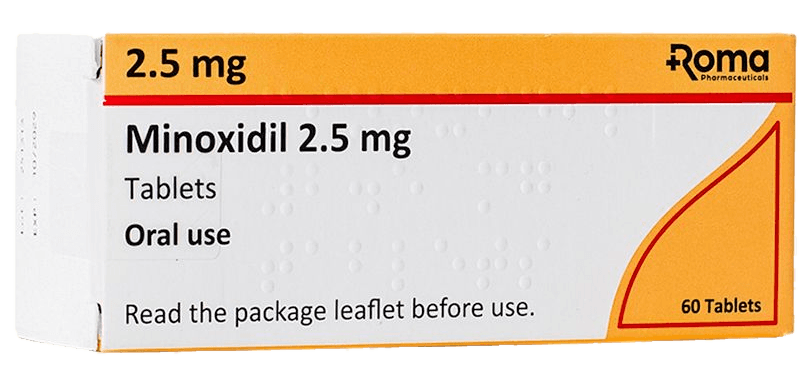
- Oral minoxidil is the same ingredient as one small tablet. It was originally licensed as a blood pressure medicine at high doses.3 At doses many times lower, it's prescribed off-label for hair loss by dermatologists and hair specialists across the UK and internationally, because the evidence for it has grown over the last decade.1
"Off-label" means the packet isn't licensed for hair loss, but the use is recognised, supported by a growing body of evidence, and one that a clinician takes professional responsibility for. It's common in medicine. A large share of what's prescribed for children and in dermatology is off-label. It's an established use that international hair specialists have published consensus guidance on,4 and it isn't a loophole.
Minoxidil is much better at holding your hair where it is and thickening what's there than at bringing back what's fully gone. That's a reason to consider starting sooner rather than later. It doesn't work for everyone. Some women see little or no improvement, and there's no way to know in advance.
Who it's for
Is oral minoxidil right for you?
Oral minoxidil is for women aged 18 and over with female pattern hair loss - a widening parting, a thinning crown, or general thinning across the top of the head with the hairline mostly where it always was, developing over a year or more.5
It may also suit women whose shedding has gone on for more than six months and who have already had blood tests, including iron and thyroid, that found no treatable cause. Long-running shedding sometimes turns out to be pattern loss that the shed uncovered. If you haven't had those tests yet, get them first through your Norwich GP or a home test kit. Some women who have tried topical minoxidil and stopped find the tablet easier to keep up with.
It isn't the right first step if you're experiencing shedding and can point to a recent and obvious trigger - a baby a few months ago, a recent illness, or rapid weight loss. That kind of shedding usually settles on its own, and the right thing to do is wait. And it isn't for hair loss that's patchy, scarring, or affecting your hairline and eyebrows together - patchy loss, a sore or inflamed scalp, or hairline and eyebrow thinning in women should be seen by a GP first.
Why blood tests matter
Low iron stores and thyroid problems can cause hair shedding of their own, and they're common in women. Minoxidil won't fix shedding that's driven by either. A woman with low iron who starts minoxidil may see little improvement, decide the tablet failed, and give up, when the iron needed sorting first. If you have heavy periods, follow a vegetarian or vegan diet, have a thyroid condition or feel tired, cold or foggy, check your ferritin and thyroid first. Our assessment asks about all of this to help you know what's the right step for you.
If you'll actually use the foam, use the foam
Topical minoxidil is licensed for female pattern hair loss, it's available from any pharmacy without a prescription, and it helps some women who use it every day as directed.5 If you're the kind of person who will do that, then topical minoxidil is a great option for you.
Safety first
When extra care is needed
Because oral minoxidil affects blood pressure, the clinician screens more carefully than for most hair loss treatments. They'll look at your health history and current medication, and take extra care if:
- You have a heart condition, such as angina, an irregular heart rhythm or a previous heart attack.
- You have low blood pressure or a history of fainting. Low blood pressure is common in women in their thirties and forties. The clinician may keep you on the lowest dose or suggest topical treatment. It's best to measure your blood pressure before the consultation, either at home or for free at a pharmacy in Norwich, so the conversation starts with a number rather than a guess.
- You take medication for your blood pressure or heart, because minoxidil lowers blood pressure and can add to their effect.3
- You have severe kidney or liver disease, fluid retention or unexplained swelling.
- You're over 65, because you may be more sensitive to minoxidil's effect on blood pressure.3
- You're planning a pregnancy. If you want to try for a baby in the next year, say so. You'd need to stop before you start trying, the clinician will tell you how long before, and you should expect the hair you've gained to shed over the following months.
You must not take oral minoxidil if you're pregnant, breastfeeding, or trying to conceive. Minoxidil isn't recommended in pregnancy, and it passes into breast milk.3 You also must not take it if you have a rare adrenal tumour called phaeochromocytoma,3 or if you have heart failure, a history of fluid around the heart (pericardial effusion) or pericarditis, or pulmonary hypertension caused by a heart valve problem.4 If you could become pregnant, use effective contraception while you're taking it.3
What to expect
How Norwich Hair Loss Clinic works
Minoxidil is slow, and hair loss can appear to get worse before it gets better. Women who know that from day one are the ones who stick with it.
Assessment
Not sure what's causing your hair loss? Take our 2 minute assessment first. It works out whether your hair loss is pattern loss, shedding or something a GP should see, and whether iron or thyroid need checking first. Before you start treatment, take a photo of your parting from above, in daylight. You can use it to track your progress.
Today
Clinician review
You'll complete an online consultation with our pharmacy partner, The Independent Pharmacy. A clinician reviews your answers and decides whether oral minoxidil is right for you, whether topical would suit you better, or whether something else needs looking at first.
They may ask for more information, and they can decline. If the tablet is prescribed, you'll start on a low dose, and it arrives in plain packaging with free delivery. We recommend letting your GP know you've started oral minoxidil, so your medical record is complete and anyone prescribing for you in future can take it into account. If topical minoxidil is the better fit, you can buy it from any pharmacy in Norwich, and the generic contains the same active ingredient.
This week
The shed
You may see more hair in the brush and plughole than before you started, sometimes noticeably more. As scary as this may seem, this is usually a sign the treatment is taking effect. The resting hairs are being pushed out to make room for new growth. It's temporary and expected, and it's a common reason women stop just before treatment starts to work.
If the shedding is still heavy after about 12 weeks, or you notice patchy loss or bald spots at any point, don't push through. Contact The Independent Pharmacy or your GP, because that isn't the expected pattern and needs a review.
In the meantime, root sprays, hair fibres, a clip-in topper or a new parting are all fine to use. They won't interfere with treatment.
Months 1 to 2
Shedding slows
The early shed starts to ease, and you'll notice less hair in the brush and the plughole. That's usually the first visible sign treatment is working. You probably won't see a difference in the mirror yet, so keep going and resist the urge to judge it now.
Months 3 to 4
The first real change
Many women start to see a difference at the parting when they compare it with their day one photo. Some see it sooner and some later, so don't judge it before now. If there's no change at all by month six, speak to The Independent Pharmacy about your dose or whether to continue.
Month 6
The full effect
Compare your photos to see the full result. If you'd like to discuss whether your dose is right, contact The Independent Pharmacy at any time.
Month 12
It works while you take it
If you stop treatment, the hair you gained gradually sheds over the following months and your parting returns to where it was heading. It won't be worse than if you'd never started, but it won't be protected either. If anything changes with your health, medicines or plans for pregnancy, tell The Independent Pharmacy before your next order.
Ongoing
Track your progress
Oral minoxidil before and after photos
Search for oral minoxidil before and after photos and you'll find glossy hair in flattering light, usually posted by someone selling something. We don't show them. Your own photos are the only ones that matter.
A real before and after is less dramatic but far more useful. Take a photo of your parting from above in the same daylight, with dry, unstyled hair. If treatment works for you, what you'll usually see after a year is a narrower parting with less scalp showing under bright light. It's a real improvement in your own hair.
Take your day one photos before your first dose
Take two photos - one looking down on your usual parting, and one of the top of your head with your hair pulled back. Use the same spot, the same light and the same phone position every time. Then repeat them at three, six and twelve months. Change is too gradual to spot in the mirror, so these photos are how you'll know whether treatment is working.
We'll remind you when it's time
We'll email you in three, six and twelve months with the two angles to take and a simple guide for comparing them side by side.
The week-six wobble
You're six weeks in. There's more hair in the brush than there was before you started. The plughole is worse. You've started to wonder whether you've made it worse, whether the tablet is doing the opposite of what it's meant to, and whether you should stop.

Here's what's actually happening. Minoxidil has reset the cycle in your follicles. The hairs that were sitting in their resting phase, which were going to fall out over the next several months anyway, are all being pushed out now to make room for the new hairs growing in behind them. What you're seeing is the clear-out.
For most women the shedding eases within about a month. In four or five months, look at the photo you took on day one and compare it to your parting in the same light. If treatment is working for you, that's when you'd expect to start seeing it.
If the shedding hasn't eased by around week 12, or the loss is patchy, get it reviewed.
Before you start
Important safety information
Facial hair, explained
The most common side effect of oral minoxidil in women isn't dangerous. It's cosmetic, and it's the reason most women hesitate, so here's everything you need to know.
Minoxidil encourages hair growth, and it isn't clever enough to know which hair you wanted. In the largest study, unwanted hair growth was reported by about 15% of patients.6 The average dose in that study was around 1.6mg a day, well above the 0.625mg many women start on. It appears most often at the temples and in the sideburn area, then on the upper lip, sometimes on the forehead near the hairline, and sometimes on the forearms. It's usually fine and fair rather than dark and coarse, and most women notice it in themselves long before anyone else would. Here's how we tackle this at Norwich Hair Loss Clinic:
- Our prescribing partner, The Independent Pharmacy, usually starts you on the lowest dose to minimise unwanted hair growth.
- It usually reverses. You can lower the dose or stop, and it typically fades over a few months.3
- In the meantime, threading, dermaplaning or a facial hair remover once a fortnight manages it for most women who choose to stay on, and plenty do, because a slightly fuzzy temple is a trade many women will make for a fuller parting.
We want you to know this before you start, so you won't panic at month three.
Other possible side effects
These are less common. In the largest study of low-dose oral minoxidil which followed 1,404 patients,6 they were reported at these rates:
- Dizziness or light-headedness, especially when you stand up quickly - about 1.7%
- Swelling of the ankles or feet - about 1.3%
- A faster heartbeat or a fluttery feeling - about 0.9%
- Headache - about 0.4%
- Puffiness around the eyes - about 0.3%
That study included men as well as women, and doses of up to 5mg a day, so the figures won't exactly match what to expect at a 0.625mg starting dose.
You may also notice the early shed described above, and sometimes a change in the texture of the new growth, finer at first, occasionally coarser or darker, which usually settles.
When to stop and seek advice the same day
Stop taking minoxidil and call 999 if you have chest pain, severe breathlessness or you faint.
Stop taking it and contact NHS 111 or your GP the same day if you notice sudden or marked swelling of your legs, face or abdomen, rapid weight gain (around 2kg or more in a few days), breathlessness when you lie flat, or a fast or irregular heartbeat that doesn't settle when you rest.
At the much higher doses used for blood pressure, minoxidil can cause fluid to build up around the heart (pericardial effusion).3 At hair loss doses this has only rarely been reported, but chest pain, or breathlessness that's worse when you lie flat, can be signs of it, which is why they need urgent attention.
If you find out you're pregnant, stop taking it and contact The Independent Pharmacy or your Norwich GP.
These side effects are uncommon at hair loss doses, but they matter, so never wait them out.
How the dose works
Typically, you start at a low dose. Many women start at 0.625mg, which is a quarter of the 2.5mg tablet. The dose is held for several weeks, then reviewed against how you've responded and any side effects, and adjusted one step at a time. Never increase it yourself, and never take a double dose to catch up.
Interactions
Other medicines that lower blood pressure add to minoxidil's effect. That includes blood pressure and heart medicines, and some medicines for other conditions that lower blood pressure as a side effect.3 Alcohol in quantity adds to the dizziness. Tell the clinician everything you take, including anything herbal.
What the leaflet in the box will say
Your tablets will come with a printed leaflet written for minoxidil's licensed use, which is high blood pressure. It describes doses usually several times higher than the one you'll take for hair loss, and it may mention taking minoxidil alongside other blood pressure medicines.3 Your clinician's instructions take priority over the leaflet's dosing information.
How to take it
Take your dose once a day, at about the same time, with or without food. Your clinician will tell you exactly how much to take. Minoxidil tablets come as 2.5mg, which is more than most women's daily dose, so never take a whole tablet unless you've been told to. A typical dose is a quarter of a tablet (0.625mg) or half (1.25mg). Use a pill cutter rather than a knife. Quarters won't be perfectly even, so if you find the tablets hard to split, ask The Independent Pharmacy for advice. The tablets contain lactose, so they aren't suitable if you have a rare inherited condition such as galactose intolerance or total lactase deficiency.3
If you miss a dose, take the next one at the usual time and don't double up. Keep the tablets in the original pack, out of reach of children and away from pets, as minoxidil is toxic to cats and dogs even in small amounts. It only works while you keep taking it, so link it to something you already do every day.
If you have a side effect, you can report it through the MHRA Yellow Card scheme. Please tell The Independent Pharmacy too.
Minoxidil in Norwich FAQs
For most women who pass screening, it's well tolerated. The largest study of low-dose oral minoxidil looked back at 1,404 patients, about two-thirds of them women, and fewer than 2% stopped because of side effects. The most common side effect is some extra hair growth on the face or body, which is usually mild. Serious side effects are rare at hair loss doses, but they do happen, which is why screening matters.
Before anything is prescribed, a clinician reviews your blood pressure reading and heart history to make sure it suits you. If it doesn't, topical minoxidil is a good alternative.
The answer is simple - the one you'll actually use. Topical minoxidil is licensed for hair loss, and helps some women who apply it every day (once daily for the 5% foam, twice for the 2% solution), but many women don't keep it up. Oral minoxidil is one tablet a day, which most women do keep up with, and the trade-off is a broader list of side effects.
Shedding usually slows by month three or four. The first visible change at the parting for many women is around month six. The full effect of minoxidil is around twelve months. You should judge its effectiveness by photos in the same light, not by the mirror, and not before month six. Not every woman responds, so if there's no change by then, ask for a review.
Possibly, in weeks two to eight. This is the treatment resetting your follicles and pushing out resting hairs to make room for new ones. It's temporary and expected, and it's the point where some women mistakenly stop. If it's still heavy after about 12 weeks, or the loss is patchy, get it reviewed.
It can. About 15% of patients in the largest study, roughly one in seven, notice fine extra hair, most often at the temples and sideburns, sometimes the upper lip. It's usually reversible - lowering the dose is the first fix, and threading or dermaplaning manage it in the meantime.
Many women start at 0.625mg, a quarter of a 2.5mg tablet. Your clinician sets the dose and adjusts it based on your response and any side effects.
Oral minoxidil tablets cost £44.99 for 60 tablets. Because you take part of a tablet, a pack lasts longer than it looks. At 0.625mg a day, one pack lasts around 8 months, so a year of treatment costs around £70.
It doesn't cause fat gain. A small number of people, a little over 1% in the largest study, get fluid retention, which can show as swollen ankles or a small rise on the scales. Rapid weight gain of around 2kg or more in a few days is a reason to stop and seek medical advice the same day.
Yes, some specialists prescribe both together, though there's limited evidence on how much extra benefit it adds. If you're already using the foam or solution, tell the clinician so they can take it into account when setting your dose.
Specialists sometimes prescribe the two together. Both can lower blood pressure, so the clinician needs to know if you take spironolactone, including the dose and who prescribes it, before deciding whether oral minoxidil is suitable.
The hair you gained sheds over the following months and your parting returns to where it would have been without treatment. If you're stopping to try for a baby, tell the clinician, who'll say how long before that you need to stop.
Yes. Hormonal contraception is fine alongside minoxidil, which isn't a hormone. If you could become pregnant, you should use effective contraception while taking oral minoxidil, because it must not be taken during pregnancy. The clinician will ask which one you use, mainly because some progestogens are more androgenic than others and can be part of the hair loss picture.
Yes. They do different things. HRT isn't a hair loss treatment, and many women on HRT still choose to treat their hair loss separately. Tell the clinician you're on it.
Yes. A prescribing clinician at our pharmacy partner reviews your full assessment online. Oral minoxidil for hair loss isn't commonly available on the NHS. You don't need a GP referral, but we recommend telling your GP that you're taking it, because it can affect blood pressure and interact with other medicines.
Oral minoxidil is licensed for blood pressure at high doses. It's prescribed off-label, which is common in dermatology. What matters is that a clinician is taking responsibility for the decision, screening you properly, and setting the dose. That's why it's prescription-only and why eligibility isn't a formality.
Not usually. Topical minoxidil isn't available on NHS prescription, and oral minoxidil is rarely prescribed for hair loss. Your Norwich GP may be able to arrange ferritin and thyroid blood tests, which are helpful to have before you start. Explain your hair loss and ask whether they'd be appropriate. If not, private tests are available.
About the author

Andy Boysan
BPharm (Hons) · GPhC Registered Pharmacist
Andy Boysan is a GPhC-registered pharmacist and co-founder of The Independent Pharmacy, with over 30 years’ experience across community pharmacy and specialist settings. His expertise covers clinical governance and regulatory compliance, patient safety and quality improvement, and medicines management and optimisation.
Andy graduated from the University of Bath in 1997 with a BPharm (Hons) in Pharmacy. He has held senior leadership roles managing individual pharmacies, clusters and wider regions for major national chains, with responsibility for performance, regulatory compliance and standards of patient care.
He now leads the clinical and operational strategy at The Independent Pharmacy, overseeing regulatory compliance and ensuring the pharmacy operates to high standards of quality and governance.
- Professional registration
- GPhC 2047716 (General Pharmaceutical Council)
- BPharm (Hons), University of Bath
Medically reviewed
This page was last medically reviewed by Andy Boysan on .

Andy Boysan
BPharm (Hons) · GPhC Registered Pharmacist
Norwich Hair Loss Clinic is committed to providing clear, accurate and evidence-based information about hair loss, hair thinning, scalp conditions and their treatment.
Our content is reviewed at least every 12 months to reflect current UK clinical guidance. All treatment pathways described on this website are subject to individual clinical assessment and review.
Read our editorial policy to see how our content is written, reviewed and kept up to date.
